1. Introduction
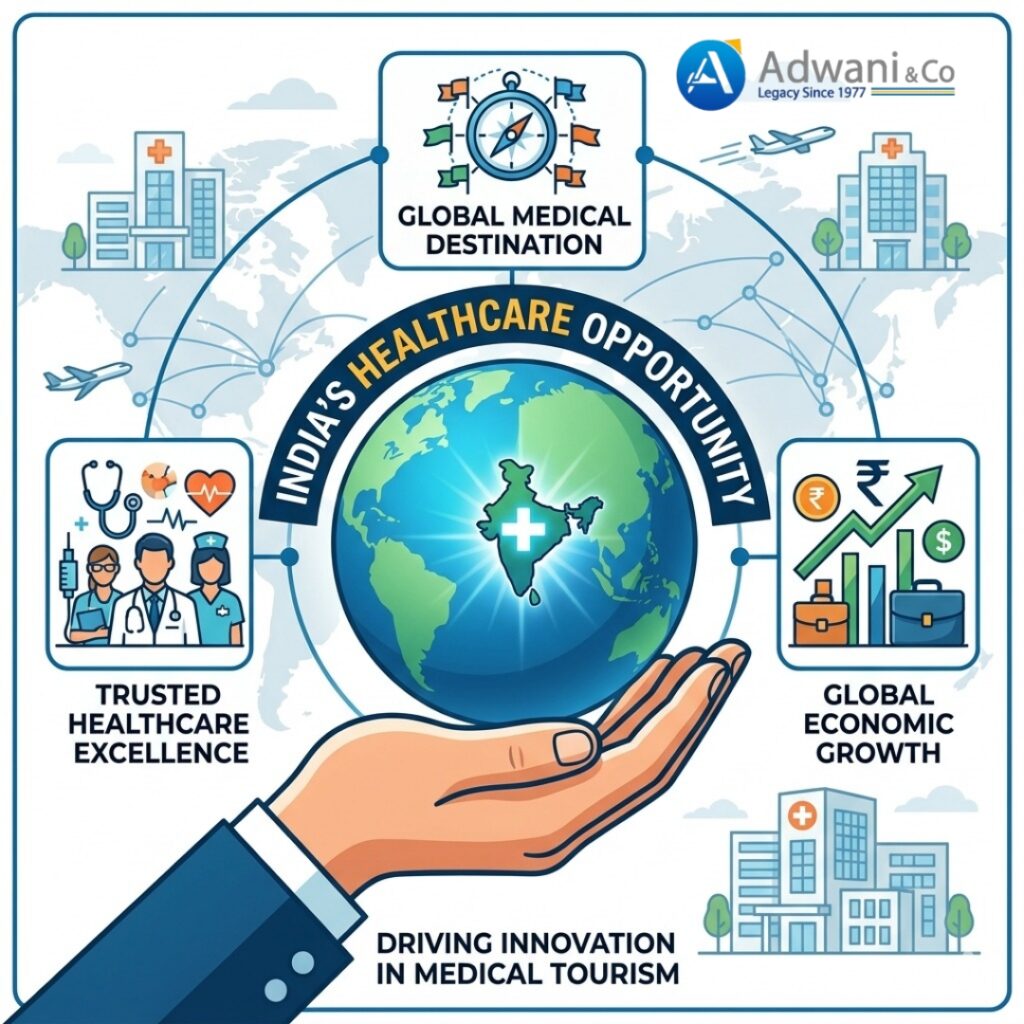
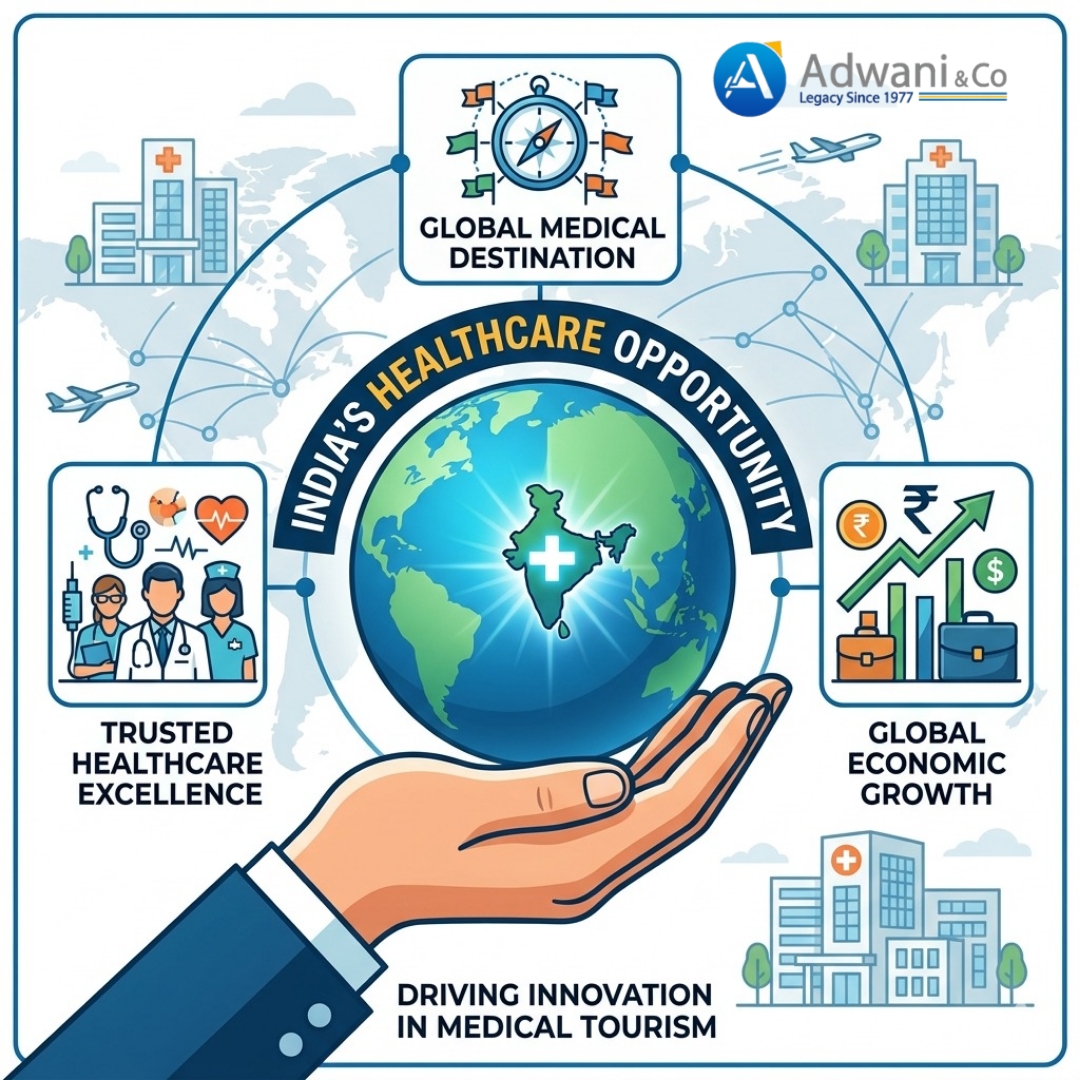
India has emerged as one of the leading destinations for international medical treatment due to its combination of highly skilled doctors, advanced hospital infrastructure and comparatively lower treatment costs.
Patients from regions such as the Middle East, Africa, South Asia and Central Asia increasingly travel to India for specialised treatments including oncology, cardiac surgery, orthopaedics and organ transplantation.
Recognising the economic potential of this sector, the Government of India has taken several policy initiatives to strengthen India’s position as a global healthcare destination. Key initiatives include the “Heal in India” programme, development of medical tourism infrastructure and improvements in visa facilitation for international patients.
2. Government Policy Measures to Promote Medical Tourism
(a) Heal in India Initiative
The Heal in India initiative aims to position India as a global hub for medical and wellness tourism by integrating healthcare services, tourism infrastructure and international patient facilitation systems.
Key objectives include:
- Promoting India as a preferred global healthcare destination
- Enhancing international patient support systems
- Encouraging public-private partnerships in healthcare
- Strengthening global outreach of Indian hospitals
(b) Development of Medical Tourism Hubs
Recent policy announcements have proposed the creation of regional medical tourism hubs through collaboration between government and private healthcare institutions.
These hubs are expected to integrate:
- Tertiary care hospitals
- Diagnostic centers
- Rehabilitation facilities
- Wellness and AYUSH centers
- International patient facilitation services
The objective is to create a structured ecosystem for international patients.
(c) Simplification of Medical Visa Regime
The Government has introduced Medical Visa (M-Visa) and Medical Attendant Visa (MX-Visa) categories to facilitate travel of international patients and their attendants.
Key features include:
- Expedited visa processing
- Multiple entry options for follow-up treatment
- Extension facility depending on treatment duration
These measures significantly improve international patient access to Indian healthcare institutions.
3. FEMA Framework for Medical Tourism
Cross-border healthcare services involve foreign exchange transactions and therefore fall under the regulatory framework of the Foreign Exchange Management Act (FEMA), 1999. Relevant regulations are administered by the Reserve Bank of India (RBI).
(a) Treatment of Healthcare Services as Export of Services
When a foreign patient travels to India and receives treatment from an Indian hospital, the service is generally treated as export of healthcare services, provided payment is received in convertible foreign exchange.
Export of services is governed by:
- FEMA (Current Account Transactions) Rules
- RBI Master Directions on Export of Services
Hospitals receiving foreign exchange must route the transaction through Authorised Dealer (AD) banks.
(b) Permitted Modes of Payment
Hospitals may receive payments from international patients through:
- Foreign inward remittance through banking channels
- International credit or debit cards
- Payment through authorised forex intermediaries
- Advance remittances for scheduled medical procedures
Proper documentation must be maintained including:
- Patient identity records
- Treatment invoices
- Proof of foreign exchange receipt
(c) Foreign Currency Accounts
Hospitals dealing with international patients may maintain foreign currency accounts subject to FEMA regulations and approval of authorised banks for operational convenience.
These accounts help manage:
- International insurance payments
- Advance treatment deposits
- Refunds or adjustments for overseas patients
(d) Payments to International Medical Facilitators
Many hospitals engage international medical tourism facilitators or referral agents who assist foreign patients in accessing Indian healthcare services.
Payments to such facilitators involve:
- Outward remittances under FEMA
- Compliance with RBI regulations on foreign payments
- Documentation supporting the service agreement
Such transactions must be routed through authorised banks with appropriate purpose codes.
4. GST Implications on Medical Tourism
Under the Goods and Services Tax framework, healthcare services provided by clinical establishments are generally exempt from GST.
Healthcare services include:
- Diagnosis
- Treatment
- Surgery
- Care for illness, injury or deformity
Therefore, treatment provided to foreign patients in India typically remains GST exempt, provided it qualifies as healthcare service under GST law.
However, certain services associated with medical tourism may attract GST, including:
- Accommodation arrangements
- Medical facilitation services
- Consultancy services by intermediaries
Hospitals must ensure proper classification of services to determine GST applicability.
5. Economic Impact of Medical Tourism
Medical tourism contributes significantly to the Indian economy through:
- Foreign exchange inflows
- Employment generation in healthcare and allied sectors
- Expansion of hospital infrastructure
- Growth in hospitality, travel and logistics sectors
The sector is expected to experience significant growth as India continues to strengthen its healthcare ecosystem and global reputation for specialised treatment.
6. Role of Compliance and Financial Advisory
As medical tourism expands, hospitals increasingly face complex regulatory requirements relating to:
- FEMA compliance
- Cross-border payment documentation
- Tax treatment of international services
- Contractual arrangements with global medical facilitators
Professional advisory services play an important role in ensuring that healthcare institutions comply with regulatory frameworks while efficiently managing international healthcare operations.
7. Conclusion
India’s healthcare sector is progressively integrating with the global medical ecosystem. Government initiatives, improved regulatory frameworks and internationally respected medical professionals position India strongly in the global medical tourism landscape. With continued policy support and compliance frameworks, Indian doctors and healthcare institutions are well placed to strengthen India’s reputation as a trusted destination for international medical treatment.